
 Facebook
 X
X
 Pinterest
 Copy Link
Condo vs. Single-Family: Choosing Your Perfect North Suburb Vibe
![[HERO] Condo vs. Single-Family: Choosing Your Perfect North Suburb Vibe](https://cdn.marblism.com/UwkcvFbQTeM.webp)
You’re ready to make a move to the North Suburbs. Maybe you’re leaving the city behind, or maybe you’re already here and just need something different. Either way, you’ve hit the fork in the road: condo or single-family home?
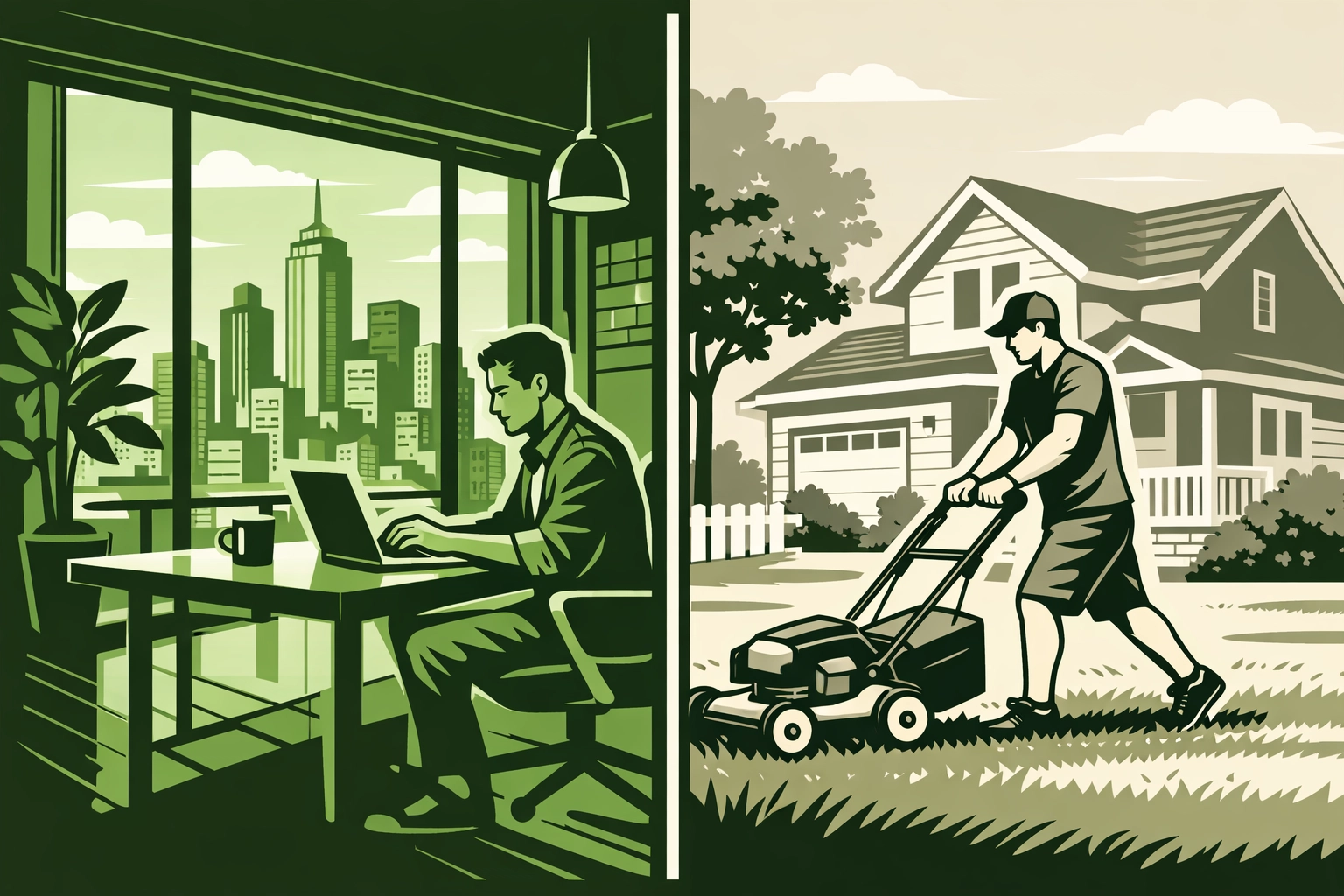
It’s not just about square footage or price tags. It’s about how you want to live. Do you want to lock the door and leave for a week without worrying about the gutters? Or do you want a yard where you can do whatever you want on a Saturday morning?
Let’s break down what actually matters when you’re buying a home in Chicago suburbs, specifically the Cook County north suburbs, so you can figure out which vibe fits your life right now.
The Real Question: What Kind of Life Are You Building?
Here’s the thing: condos and single-family homes aren’t just different property types. They’re different lifestyles.
A condo is essentially owning your own space inside a shared building. You own everything inside your unit, the walls, floors, appliances, all of it. But the building exterior, the roof, the hallways, the landscaping? That’s handled by the HOA (Homeowner’s Association). You pay monthly fees, they take care of the outside stuff, and you get to focus on your life.
A single-family home means you own the whole thing. The house, the yard, the roof, the driveway, it’s all yours. Which sounds awesome until you realize it’s all yours to maintain, too.
So the first question isn’t really “which is better?” It’s “what do I actually want to be responsible for?”

Maintenance: DIY Hero or Hands-Off Professional?
Let’s talk about what happens when something breaks.
With a condo, if the roof starts leaking or the building needs new siding, that’s not your Saturday project. The HOA handles it. Snow removal? Done. Landscaping? Done. You pay your monthly HOA fee, and those tasks disappear from your to-do list.
This is clutch if you travel a lot, work crazy hours, or just don’t want to spend your weekends dealing with property maintenance. It’s also why condos are popular with professionals in Skokie, Niles, or Des Plaines who want to be close to the city but don’t want to babysit a house.
With a single-family home, you’re the superintendent. Gutters need cleaning? That’s you. Furnace acting weird? Call someone and pay for it yourself. Lawn looking rough? Time to mow. It’s more work, but it also means you control the timeline and the quality. No waiting on an HOA board to approve repairs.
Here’s the reality: if you like having projects and the autonomy to handle things your way, a single-family home gives you that freedom. If you’d rather spend your time literally anywhere else, a condo makes sense.
The Money Talk: Upfront Costs and Monthly Reality
As of late 2025, the median price for a single-family home was sitting around $420,600, while condos averaged closer to $363,700. That’s a $57,000 difference right out of the gate.
But here’s where it gets interesting: condos come with monthly HOA fees. Depending on where you’re looking in the best suburbs north of Chicago to live, places like Glenview, Morton Grove, or Park Ridge, those fees can range from $200 to $600+ per month. Sometimes more if the building has serious amenities or upcoming special assessments.
Single-family homes don’t have HOA fees (usually), but your utility bills will be higher because you’re heating and cooling more square footage. And you’ll be budgeting for maintenance costs that condos bundle into that monthly fee.
Insurance is cheaper on condos since you’re only covering the interior. With a single-family home, you’re insuring the whole structure, inside and out.
So yeah, condos are cheaper upfront, but factor in those HOA fees over time. Single-family homes cost more initially, but you’re not writing a check to an association every month.
Privacy vs. Community: What’s Your Comfort Zone?
Single-family homes win on privacy, no question. You’ve got space between you and the neighbors. No shared walls. No footsteps above your head at 11 PM. If you want to blast music, have people over, or just exist without thinking about who’s next door, a house gives you that buffer.
Condos mean proximity. Shared walls, shared hallways, shared parking. You’ll hear your neighbors sometimes. They’ll hear you. That’s just the deal.
But here’s the flip side: condos often come with community amenities that would cost a fortune if you tried to build them yourself. We’re talking pools, fitness centers, party rooms, maybe even a concierge or security desk. If you’re the type who’d actually use that stuff, it’s a huge value-add.
Some condo buildings in the Cook County north suburbs feel like mini-communities. You run into the same people, there’s a vibe, sometimes friendships form naturally. If you’re moving from the city and miss that density, a condo can scratch that itch.
Single-family homes feel more private, but also more isolated. You’re not bumping into neighbors in the elevator. That’s either a feature or a bug depending on your personality.
Autonomy: How Much Control Do You Actually Want?
Here’s where single-family homes dominate: you can do whatever you want.
Want to paint your front door neon green? Go for it. Want to build a garden, install a basketball hoop, get a dog: or three? No one’s stopping you. Your property, your rules.
Condos come with restrictions. The HOA has bylaws about everything: pets (size limits, breed restrictions), exterior modifications (no personal touches on balconies or doors), noise levels, even what you can park in your spot. Some people find it annoying. Others appreciate the structure because it keeps the building looking clean and consistent.
If you’re someone who likes to personalize your space or hates being told what to do, a single-family home is going to feel a lot more like yours. If you’re cool trading some autonomy for less responsibility, a condo works.

Space: How Much Room Do You Actually Need?
Single-family homes typically offer more square footage, more bedrooms, more storage. If you’ve got kids, or you’re planning to, or you just like having room to spread out, a house makes sense.
Condos are usually smaller. That’s not necessarily a bad thing: less space means less to clean, less to furnish, less to maintain. If you’re downsizing, going solo, or just don’t need three extra rooms you’ll never use, a condo can feel right-sized instead of cramped.
Think about your actual day-to-day. Do you need a home office? A basement for storage? A backyard for the dog? Or would you rather have something efficient that doesn’t take all weekend to clean?
Resale Value: Thinking About the Exit
Single-family homes generally have stronger resale value and broader buyer appeal. Everyone wants a house with a yard and privacy. The buyer pool is bigger, which usually means more competitive offers when you’re ready to sell.
Condos have a smaller buyer pool, and the HOA fees can scare off some people. Plus, if the building has deferred maintenance or a big special assessment coming, that’ll hurt your resale.
That said, if you’re buying in a solid building in a strong market: think Mount Prospect, Glenview, or Park Ridge: you can still do well. Just know that when it’s time to move, you’re working with a slightly more niche audience.
So, Which One’s Right for You?
Here’s the truth: there’s no universal “better” option. It depends on where you are in life right now.
Go with a condo if:
- You travel a lot or work long hours and don’t want to deal with maintenance
- You’re downsizing and want something manageable
- You like having amenities nearby without the work
- You’re okay with HOA rules in exchange for less responsibility
Go with a single-family home if:
- You want space, privacy, and autonomy
- You’re cool with (or even enjoy) property maintenance
- You want a yard, a garage, room to grow
- You value long-term resale flexibility
If you’re still on the fence, that’s normal. The Cook County north suburbs homes for sale offer both options in really solid neighborhoods. Sometimes it helps to just tour a few places and see what feels right when you walk in.


Christian Cruz
Real Estate Agent | Cruz Dwellings
If you’re ready to find your perfect North Suburb home (or you just want to talk through the options), reach out and let’s set up a quick consultation. Casual, no pressure—just clarity.
